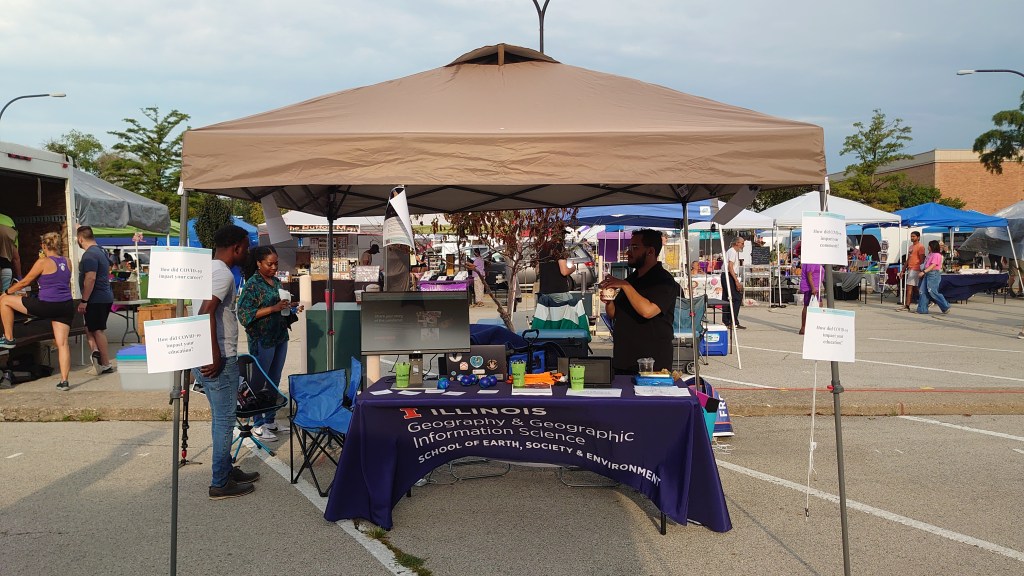
How has Covid-19 affected your community? Even within communities, the question generates a variety of answers. The US Covid Atlas team, in partnership with Truth and Documentary, asked patrons of the Urbana Farmers’ Market various questions about the impacts of the COVID-19 pandemic.
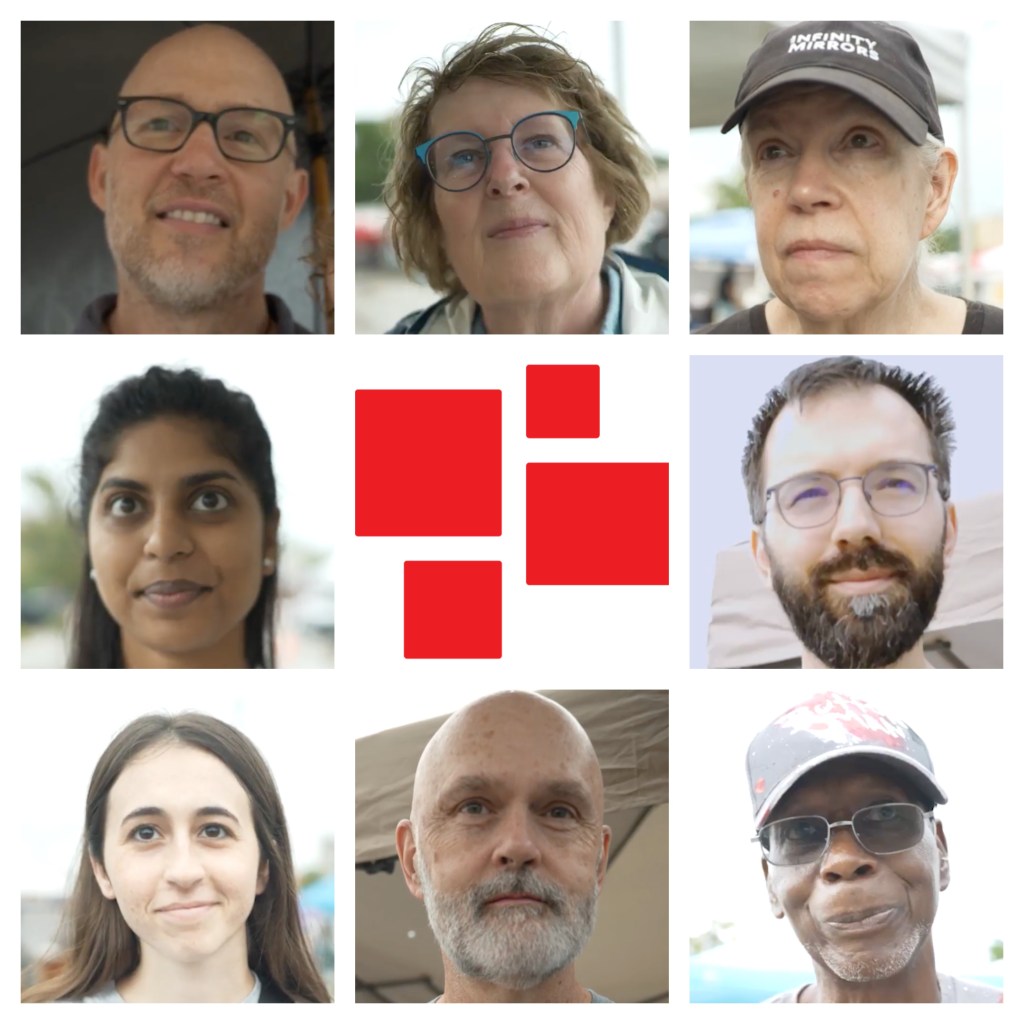
This was a community event expanding the Atlas Stories, which connects Covid cases with community indicators and stories. Stories are gathered at community events such as a farmers market, or self-submitted online.
On a rainy Saturday morning this August, the team set up at the Urbana farmers market to learn more about peoples’ experiences with Covid-19 and it’s impact on their local community.
Around a quarter of the population in Champaign County were and continue to be infected by the virus. Forty percent of people in Champaign County are considered “Essential Workers”, which has provided interesting and unique outcomes for the local community.

Even if they were not directly afflicted with it, communities felt the effects through the restrictions meant to contain the spread of COVID-19. Some at the farmer’s market felt that the precautions were overhyped and doubted “how real this COVID-19 really was”, while others experienced long-term health issues, which still affect them to this day.
Frontline and essential workers experienced firsthand the effects of the Pandemic. In the early days of the Pandemic, many consumers feared that necessary supplies would disappear from the shelves, leading to “panic-buying” and a strain on supply chains across the globe.
Hospitals and healthcare workers were the first to feel this strain. While overwhelmed with Covid patients, others were put on hold and encouraged to stay home. Working so closely with the public also made healthcare workers a target for blame because of the protocols put in place to keep patients and workers safe and healthy.
These jobs would also have to shift cultures as coming to the office became a health risk. Many people who were interviewed spoke of the change in their workplace environment as working from home became the new norm. As some people welcomed the flexibility that working from home offers, others expressed a desire for the community that working in person offered before the Pandemic. Further, people felt that they had also lost their local communities. Local businesses closed their doors, places for socialization disappeared, and neighborhoods began to socially distance from each other. Many people ceased their daily routines and still have not felt safe enough to go outside without a mask or at all. Still, many people found workarounds to satisfy the human need for “connection in a time of isolation”.
Every single person in these interviews have prevailed and shown resilience against the COVID-19 pandemic. Although the Pandemic may not be completely over, participants were asked what they believe the legacy of the Pandemic will be. Many were not hopeful that it would be remembered as significant and that the voices of deniers would overtake the stories of people affected directly. By storytelling and giving a human take on the last three years, participants ensured that their experiences would live on through the US Covid Atlas, for generations of people to see.
About the Covid Atlas
Healthy Regions & Policies Lab leads the US Covid Atlas, a free visualization tool, report builder, & community toolkit that connects COVID case data and community indicators across the United States from its beginning. The Atlas helps you access county-level data on COVID and the social determinants of health, use spatial analysis, and share stories to better understand the spread in communities and to bolster planning efforts. The Atlas is in part funded by the Robert Wood Johnson Foundation.
Resources:
 Healthy Regions & Policies Lab
Leave a comment