
Neighborhoods are complex systems with spatial signals that help decode their stories. We integrate innovative GIScience, public health, and statistical approaches to explore, understand, and promote healthy places.
Research Program Themes
1.
Defining how place impacts & interacts with health
We focus on complexity surrounding the measurement, mapping, and distillation of multiple health outcomes and associated social determinants of health at varying scales, to gain a greater understanding of disease prevalence.
2.
Identifying disparities of access & health outcomes
In collaboration with clinical and public health teams, we explore the relationship of accessibility as a function of health outcomes, from food access disparities to availability of evidence-based medications for opioid use disorder.
3.
Building engaged, participatory infrastructures
We collaborate with policymakers, community members, researchers, and software engineers to brainstorm ways of integrating complex information about the natural, social, health, & built environments — using human-centered design thinking.
4.
Integrating spatial thinking in research design
Spatial effects can violate core components of the standard counterfactual framework used for evaluation, making treatment effects difficult to assess. We refine and improve methods to consider & account for spatial interactions.
Select Research Projects
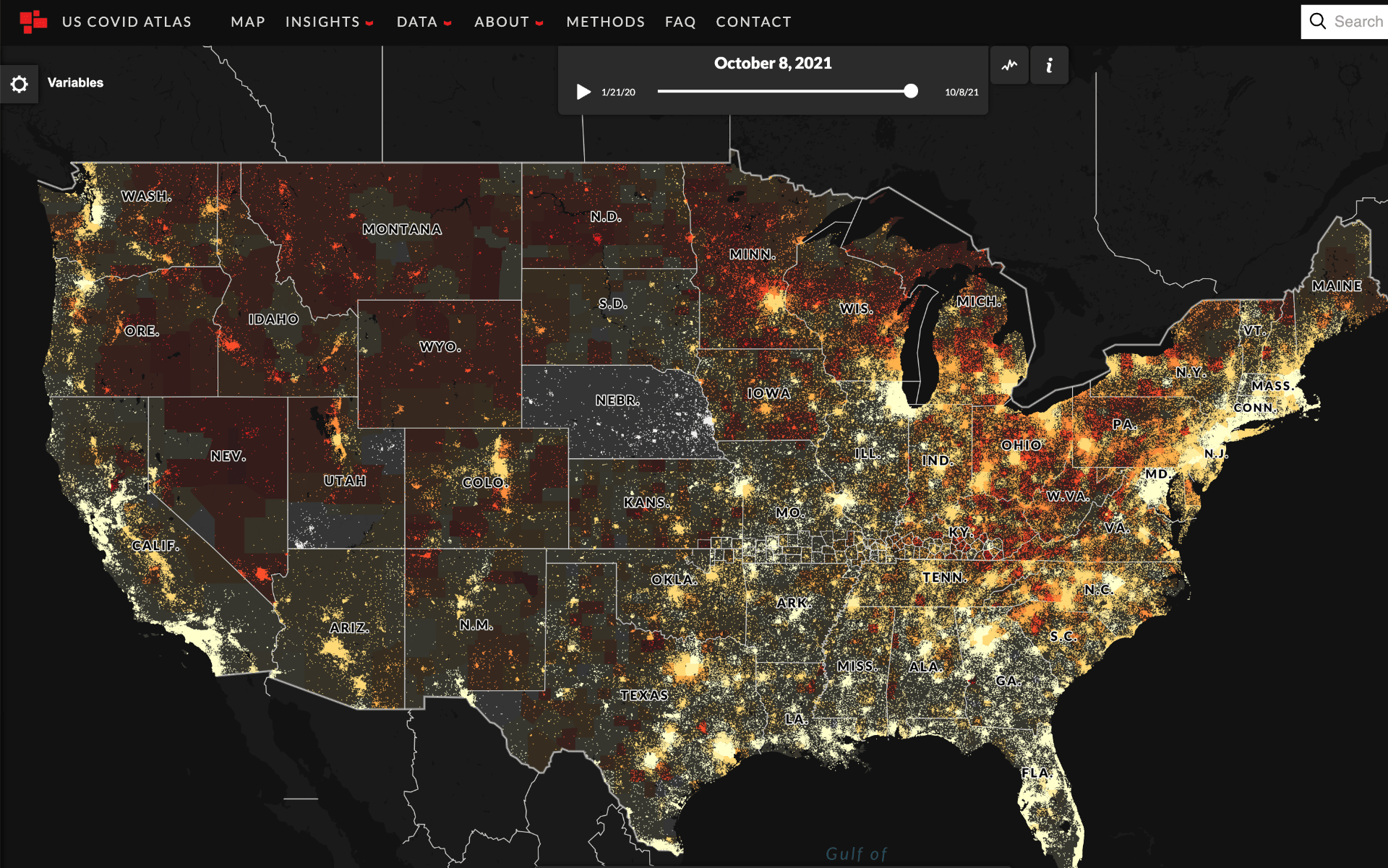
Since early 2020, we’ve made spatial statistics accessible in the web browser, encouraging users to explore the pandemic from its start to today. In the latest push, we’re humanizing the data with oral histories from across the country. We also explore how regional social determinants of health impact COVID.
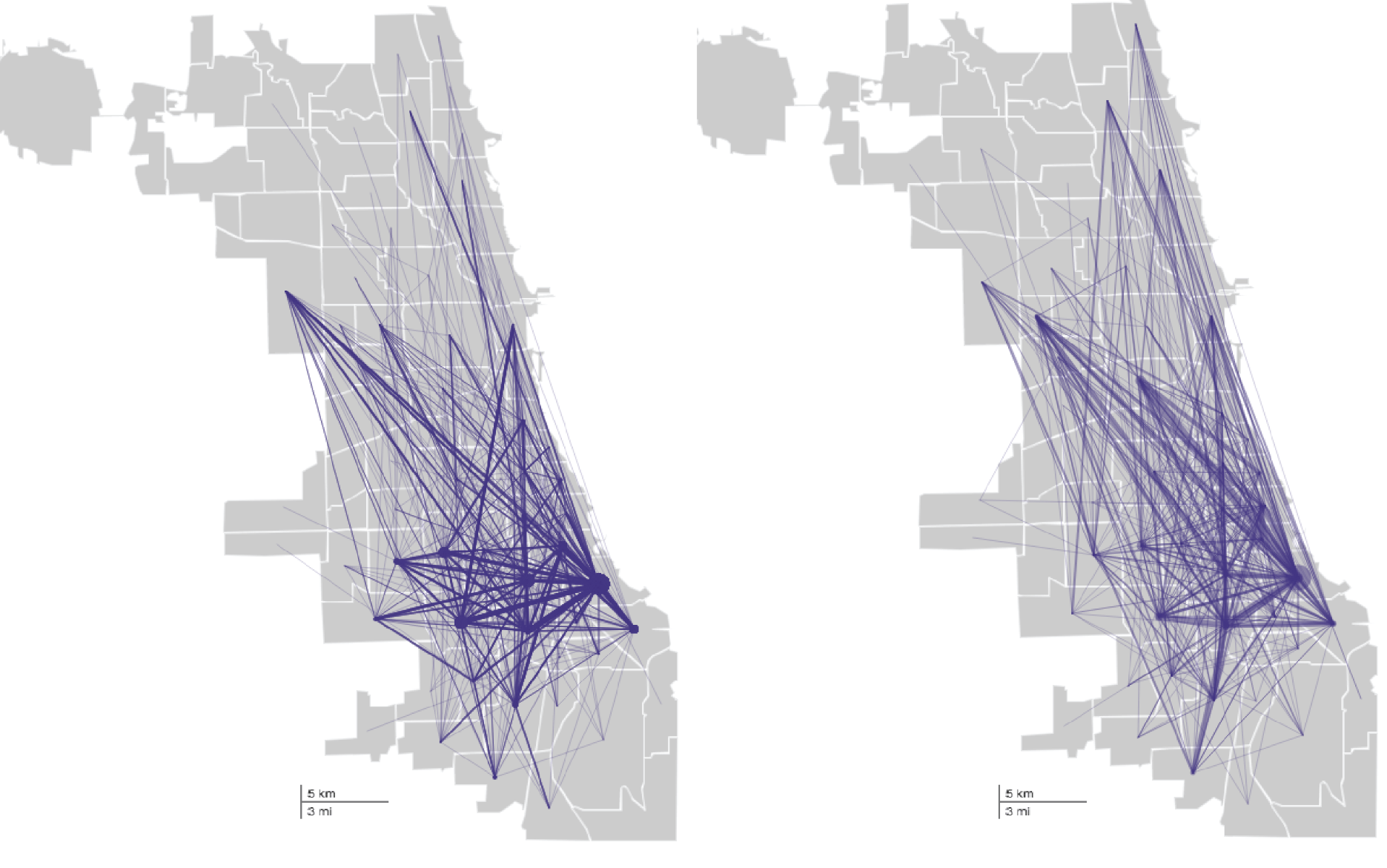
Place and Social-Spatial Networks
We have multiple projects exploring how neighborhood connections between people can be better understood to prioritize places, individuals, or groups for life-saving and harm-reducing health interventions.
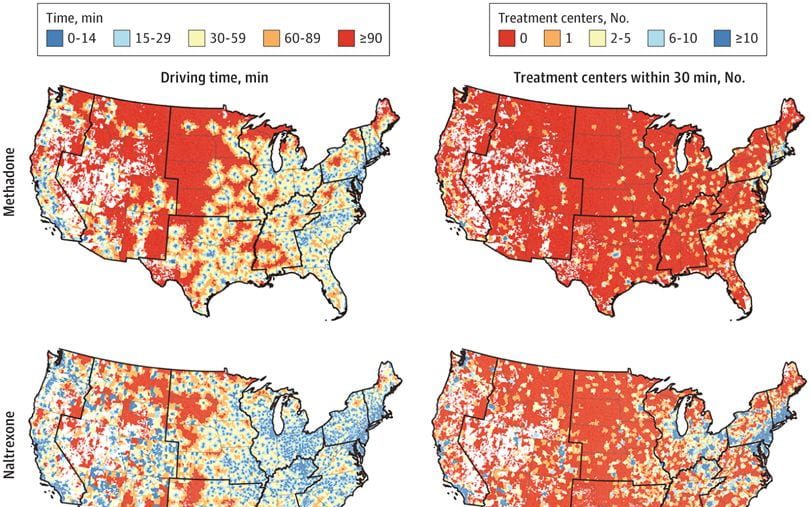
Measuring Opioid Risk Environments
We are the geospatial core leads at the JCOIN Methodology and Advanced Analytics Resource Center, and collaborate with many other teams to measure opioid risk environments, access to medication for opioid use disorder, and implement quasi-experimental research designs to evaluate spatial impacts.
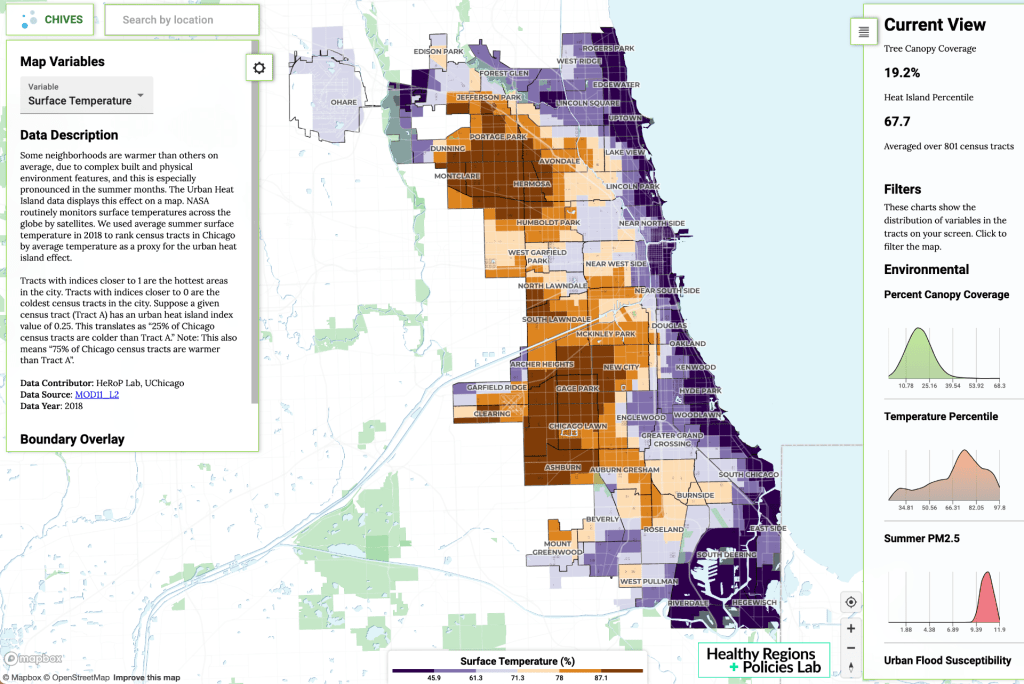
Decision Supports for Environmental Justice
A handful of key metrics―tree cover, air pollution estimates, heat island effects, traffic volumes, and social vulnerability index― help to reveal where in the city people face particular challenges. Following years of collaboration with different groups, we’re now fine-tuning ChiVes to support community efforts.
Latest News from HeRoP Lab
-
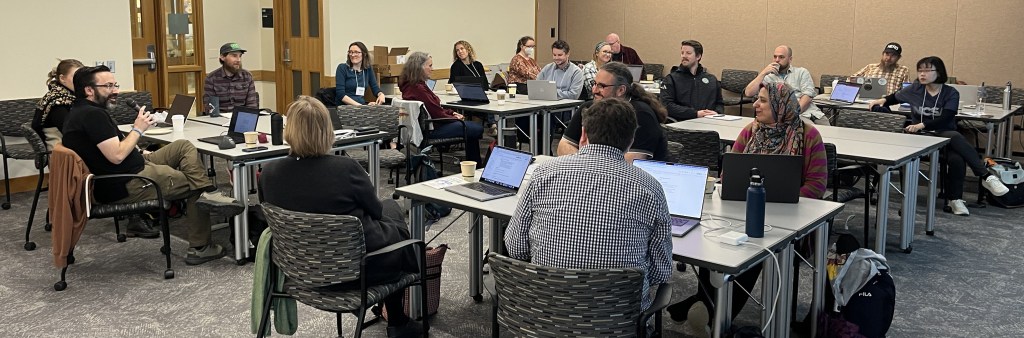
Healthy Regions + NCSA at Geo4Lib Camp 2025
Healthy Regions & NCSA at Geo4Lib Camp 2025 In May 2025, Adam Cox and Pengyin Shan from the SDOH & Place Project team traveled to the University of Minnesota to attend Geo4Lib Camp, a small “unconference” for geospatial librarians and metadata experts from academic institutions across the U.S. Collaborating with members of this group since Read more
-

The 2nd SDOH & Place Symposium—Call for Applications
How do you use SDOH data to understand, support, and advance Healthy Neighborhoods? Have you generated any web applications that map out SDOH in communities? Join us in Chicago this June for the first ever SDOH & Place Symposium! Read more
-

Seeking Postdoctoral Associate for 2025
We are seeking a Postdoctoral Scholar at the Healthy Regions & Policies Lab (Dept of Geography & Geographic Information Science, University of Illinois at Urbana-Champaign). The postdoc will primarily work on an NIH/NIDA-funded project, the LOUD Study, that seeks to localize opioid use disorder response to increase medication access. Their work will focus on validating… Read more
-
The Future of Design: HeRoP at Config 2025
The Future of Design: HeRoP at Config 2025 Representing the HeRoP Lab and the University of Illinois, our Senior Product Designer, Shubham Kumar, was at the annual Figma conference held in San Francisco, California. The 3-day conference highlighted the directions in which the design industry is heading and what it means for organizations to push Read more
-

Global Heat Action Day
Exposure to heat remains a global challenge as the leading cause of weather-related deaths. On Global Heat Action Day, take a moment to learn about heat stress and what you can do to minimize its effect. If you’re a resident of the City of Chicago, it’s also a great day to share your feedback in… Read more
-

April Speaker Series: Spatial Epidemiology in Action
Spatial Epidemiology in Action: Insights from Disease Surveillance Programs. Join us for lunch, learning, and conversation at the next installment of the HEROP Speaker Series on Friday, April 25th, at 12 PM CDT. Lunch will be served from 12-12:30pm, so please join us in person a bit early to eat & mingle! Csaba Varga, DVM, Read more
Looking for a research experience?
We are not hiring other staff or UIUC student hourly researchers at this time. To get on the waitlist, contact us with your interest and resume.
The Healthy Regions & Policies Lab is supported in part by the following organizations.



 Healthy Regions & Policies Lab